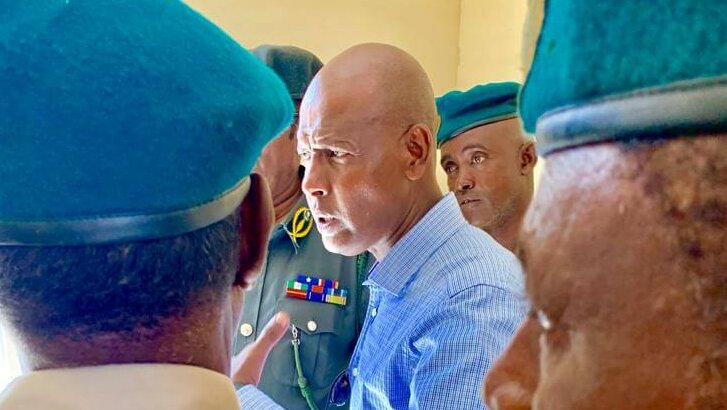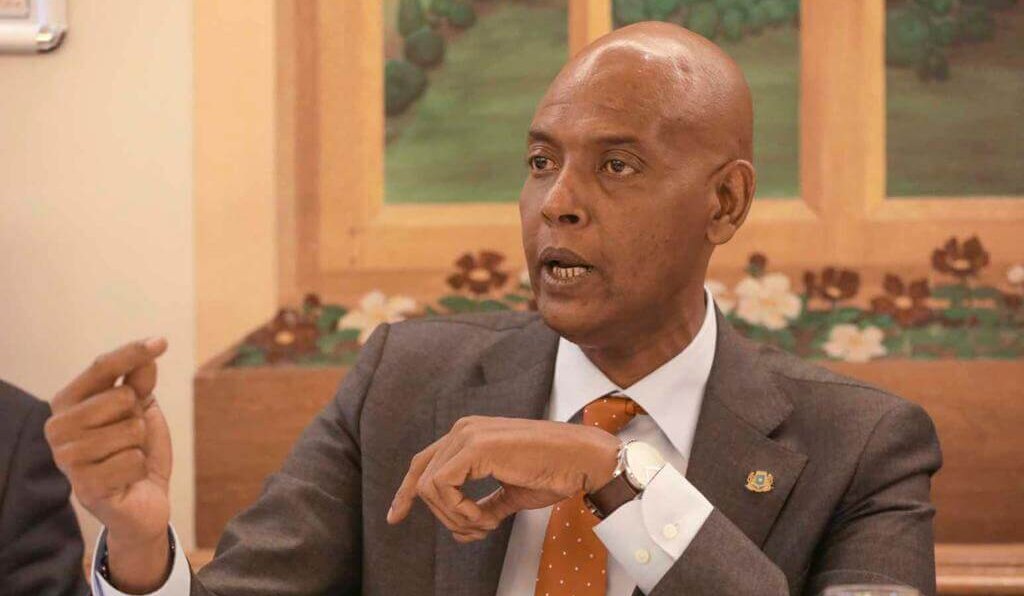
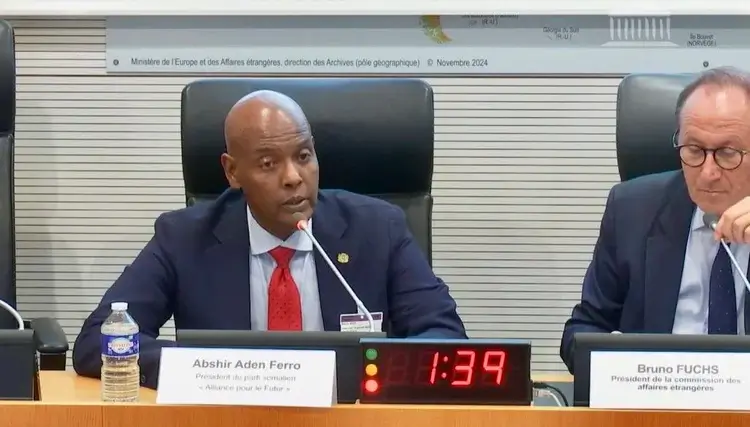
In January 2026, our Chair, Abshir Aden Ferro sat before France’s National Assembly Foreign Affairs Committee and delivered a warning that few in the room wanted to hear: the Horn of Africa was becoming the new frontline of a global “corridor war”, and Somalia was sitting directly in its path. Six months on, that warning reads less like analysis and more like prophecy.
A Region Now Nearing Boiling Point”
This is not campaign rhetoric. It is the language of the international community itself. In July 2026, the International Crisis Group published a stark assessment titled ‘As the Horn of Africa Nears Boiling Point: Time for Urgent Diplomacy‘, describing a region where rivalries in Sudan, Ethiopia, Eritrea and the Gulf are becoming dangerously entangled with one another. Days later, Al Jazeera reported on a flurry of diplomatic consultations in Cairo between Egypt, Somalia, Eritrea and a senior US envoy, all scrambling to coordinate a response to a security picture that is spiralling faster than anyone anticipated.
XIM Chair, Abshir saw this coming before most Western policymakers were paying attention.
What Abshir Told Paris
In his January briefing, Abshir laid out a clear hypothesis: global powers were “multiplying anchor points” around the world’s great maritime chokepoints, with the express aim of pressuring China. He pointed to Israel’s recognition of Somaliland on 26 December 2025, and its Foreign Minister’s visit days later, as the moment the Horn of Africa was drawn fully into this contest. He described Somaliland’s position on the Bab el-Mandeb as “a master key that unlocks access to the region”, warned that recognition meant Somaliland could sign defence agreements and host foreign military assets barely 160km from Yemen, and predicted that Djibouti would no longer be the sole foothold for outside powers in the region.
He was right on every count. Reporting since March 2026 has confirmed Israeli forces present at the Emirati-built base in Berbera, and by June, CNN was reporting a covert Israeli military presence in Somaliland outright. Houthi leader Abdul-Malik al-Houthi had already warned, within days of Israel’s recognition, that any Israeli presence in Somaliland would be treated as “a military target.” That threat has not gone away. Reuters has reported that Iran flew Revolutionary Guard commanders and missile-and-drone equipment into Houthi-controlled Yemen, a direct attempt, according to Yemen’s own information minister, to strengthen the militia’s ability “to threaten international maritime security in the Red Sea and the Bab al-Mandab Strait.” Abshir’s warning about a corridor war fought over straits and chokepoints is no longer a hypothesis. It is the daily news cycle.
Somalia Cannot Afford to Be a Spectator
Abshir’s message to the French committee was a call to action, rooted in a principle he has repeated throughout his political life: “Somalian problem, Somalian solution.” Somalia’s tragedy has always been its lack of an overall vision for its own security, borders and place in the world, leaving it vulnerable to becoming, in his words, a “playground of proxies.” That is precisely the dynamic now unfolding, as reporting describes Somalia being drawn into a widening Saudi-UAE rivalry that increasingly overlaps with the Sudan war, Ethiopian ambitions for sea access, and competition among Gulf and Western powers for footholds along the Red Sea.
This is exactly the vacuum Abshir has spent years warning against. A Somalia without a clear, sovereign strategic vision is a Somalia that other powers will draw lines through. A Somalia with strong, transparent, accountable leadership is a Somalia that can shape the region rather than be shaped by it.
Leadership That Sees Round Corners
What sets Abshir apart is not simply that he understands Somalia’s internal challenges of corruption, clan politics and Al-Shabaab. It is that his background in international security and intelligence gives him a rare vantage point on how Somalia’s crisis connects to the wider geopolitical chessboard, from the Gulf to Washington to Beijing. He was speaking about anchor points, chokepoints and great power competition in the Horn of Africa months before Cairo’s diplomats were scrambling to catch up.
Somalia’s next president will need more than good intentions. They will need the judgement to see a crisis coming and the credibility to act before it arrives. Abshir Aden Ferro has already demonstrated both. The question now is whether Somalia can afford to wait any longer for a leader who has been reading this moment correctly all along.