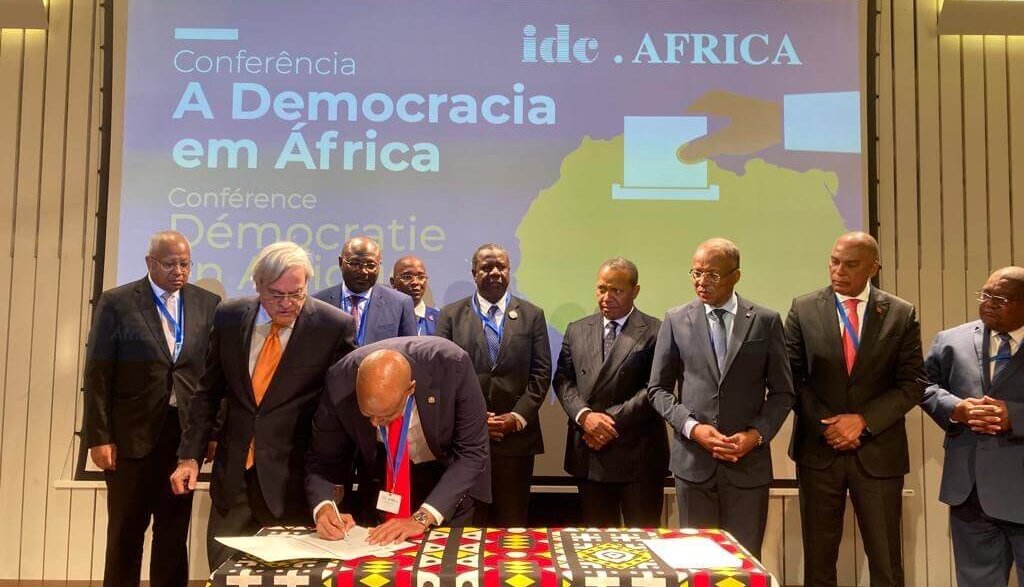
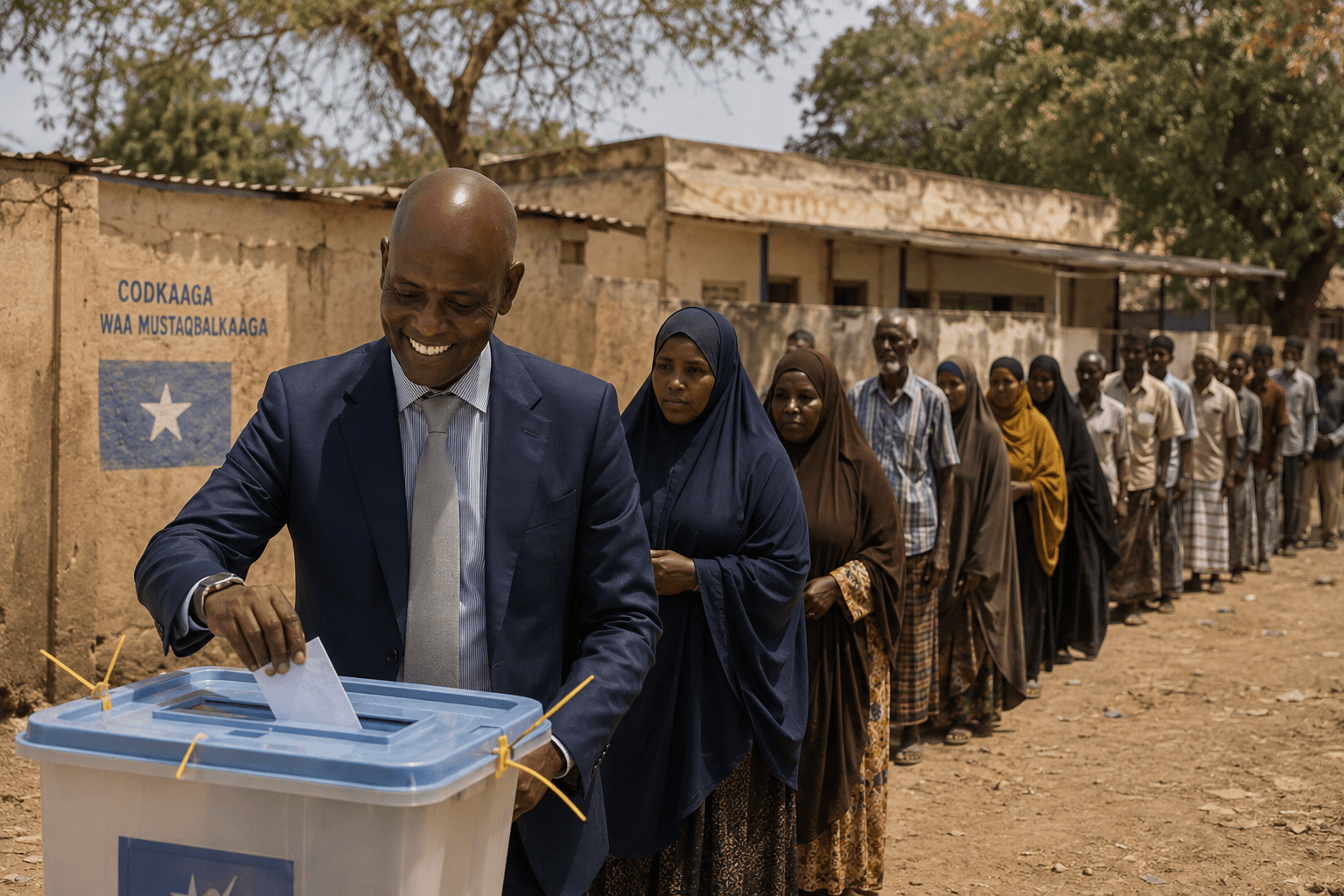
On 30th July 2026, Somalia’s central state of Galmudug went to the polls for local council and parliamentary elections under the federal government’s one person, one vote system. It was meant to be a landmark moment, the first time voters in Galmudug cast their own ballots directly rather than having their fate decided by a handful of clan elders in a back room. When results were announced on 3rd August, President Hassan Sheikh Mohamud’s Justice and Solidarity Party claimed a commanding win, with the opposition Towfiiq organisation trailing a distant second. Towfiiq cried foul immediately, filing a legal complaint alleging fraud and irregularities.
They were right to. On 24th August, Somalia’s Supreme Court, led by Chief Justice Bashe Yusuf Ahmed, threw the entire result out. Five justices found violations running through registration, candidacy, campaigning, polling and the declaration of results themselves, irregularities so serious the court ruled they could not simply be corrected and had damaged the transparency and outcome of the whole process. The Commission has now been ordered to hold a fresh vote, and on 26th August it accepted the ruling, though a new date has yet to be set.
For a government that appointed the very chief justice who just humiliated it, this is a remarkable moment. It is also deeply symbolic. A judiciary that Villa Somalia hand-picked has just told the country’s most powerful man that the rule of law does not bend to political convenience. Whatever comes next, Bashe Yusuf Ahmed and those justices deserve to be remembered as men who stood up to the machine that appointed them.
What one person, one vote actually means
Most Somalis in Somalia have never lived under one person, one vote. Nor, in truth, has Hassan Sheikh or anyone in his circle, because they have never sincerely tried to deliver it. That is not an accident. One person, one vote means exactly what it says. Every citizen, rich or poor, from every clan, region and background, walks into a polling station and casts a ballot for the leader of their choice, free from pressure, free from the say-so of a clan elder, and free from the influence of whoever controls the money and the guns. It is the simplest idea in democracy and, for Somalia, the most radical one. It is used in one form or another by the vast majority of nations on earth, from Britain to Ghana to Indonesia, because it is the only system that puts real power in the hands of ordinary people rather than the handful who already hold it.
That is precisely why a ruling like this matters so much. A Somali court, applying Somali constitutional law, has just held a Somali government to the same democratic standard the West insists on for itself. It is a genuine marker that Somalia can build institutions capable of holding power to account, rather than remaining a byword for state capture and corruption.
Villa Somalia has run out of road
Hassan Sheikh already extended his own mandate beyond its constitutional limit, an unconstitutional grab that should have ended any pretence that his government is a genuine democratic reformer. Now, with its own hand-picked Supreme Court tearing up the one result it had to show for its one person, one vote programme, Villa Somalia has nowhere left to hide. It has no answer, because the honest answer is that fair elections were never going to work in its favour. Expect delay after delay. Expect fresh excuses for why the rerun cannot happen just yet. A government that knows it will lose a fair vote has every incentive to make sure that vote never quite arrives.
This was never Villa Somalia’s cause. It was ours
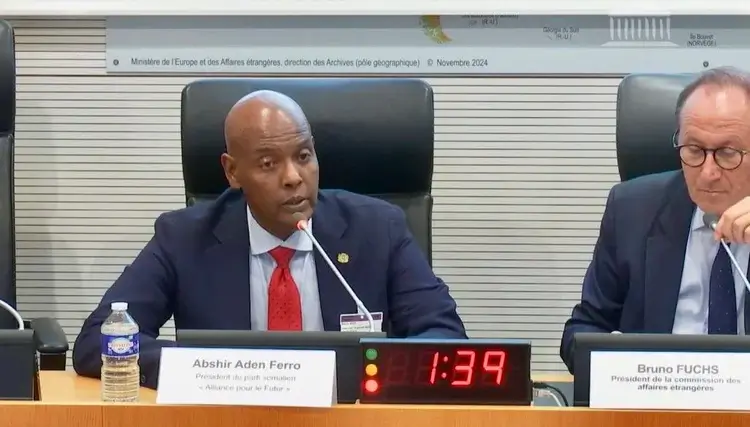
Let’s be clear about who fought for this. It was not Hassan Sheikh and it was not anyone in his government. It was Abshir Aden Ferro, campaigning for one person, one vote since he stepped back from the 2021 presidential race specifically to make this cause his own. He was the voice for millions of Somalis who had never once been asked what they wanted, giving them a genuine chance to change their own lives through the ballot box rather than through clan negotiation or backroom deals. What Villa Somalia has offered instead, in Galmudug and everywhere else, is fake one person, one vote. A system wheeled out for the cameras and abandoned the moment it produces an inconvenient result, or worse, rigged so that the result is never inconvenient in the first place.
Real democracy is not a slogan for an election cycle. It is the only tool capable of pulling Somalia out of the spiral of corruption and terrorism that has trapped the country for a generation. The Galmudug ruling shows that the institutions to deliver it can exist, even inside a government determined to resist them. What Somalia needs now is a leader who will not just tolerate one person, one vote when it is politically convenient, but who fought for it from the start and will defend it once in office. That is the choice in front of Somalia. Fake democracy under Villa Somalia, or the real thing under Abshir Aden Ferro.