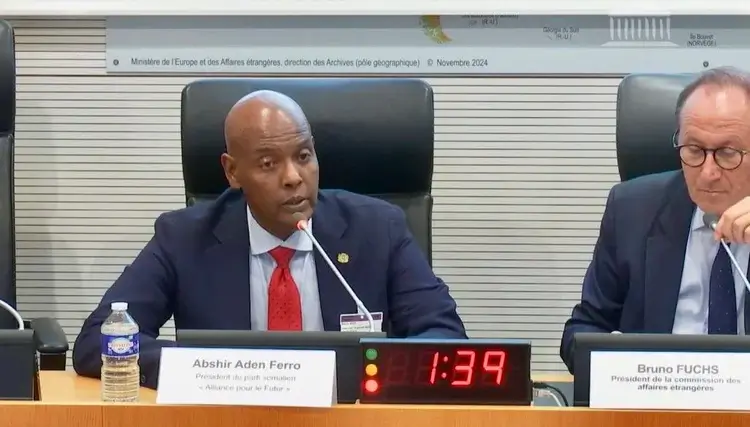

Somali piracy is no longer a story from the history books. Over the past year, hijackings off the Horn of Africa have surged again, with pirates seizing tankers and cargo ships and using them as floating bases to launch further attacks. For XIM’s Chair, Abshir Aden Ferro, this resurgence is proof that Somalia cannot simply wait for foreign navies to solve a problem that starts on Somali soil. His platform of hope, peace, and security puts piracy at the centre of a wider plan to restore order, rebuild the economy, and give young Somalis a future that does not depend on ransom money.
Why Piracy is Making a Comeback
Somali piracy first exploded in the mid to late 2000s, costing the global economy billions of pounds before international naval patrols brought the numbers down. That success was always fragile. Analysts at the Center for Maritime Strategy have pointed out that although recent hijackings were made easier by naval forces being stretched thin dealing with the Red Sea and Strait of Hormuz crises, the pirates’ growing sophistication, Somalia’s weakened capacity to respond, and the underlying poverty driving people towards piracy mean the threat is likely to persist even once shipping in those waters returns to normal.
That pattern has played out visibly this year. Pirates have been reported using a hijacked cement carrier as a mothership off Puntland, holding several captured vessels at once and demanding hefty ransoms while international patrols were distracted elsewhere. The tanker MT Asana, seized in the Gulf of Aden, became the latest addition to a growing list of hijacked ships including the Honour 25, Sward, and Eureka, all held off Puntland for ransom. Strikingly, residents told Marine Insight that pirates were seen bringing food to the crew held captive on the Asana, a small but telling detail that speaks to how deeply piracy is woven into the everyday life and economy of coastal communities, rather than being the work of a small criminal fringe.
That local entanglement is exactly what makes piracy so hard to eradicate through naval force alone. Research published in Global Policy Journal describes how piracy in Puntland functions almost as an alternative welfare system in a region where the state is largely absent. Ransom money spreads through entire communities via informal investment schemes, and pirates are sometimes cast locally as defenders against illegal foreign fishing and toxic waste dumping rather than as criminals. As long as ransom pays better than any legal alternative, the argument goes, ships on patrol will only ever be treating the symptom.
Abshir’s Plan: Cut Off the Money, Give Young People Something Better
Abshir Aden Ferro’s vision treats piracy as both a security problem and an economic one, and his plan reflects that dual approach.
On security, he is unambiguous. Somalia needs to restore order to every corner of the country and cut off the financial pipelines that let piracy and extremism thrive. Under his plan, those responsible for hijackings and ransom demands would face justice in Somali courts rather than operating with the kind of impunity that has allowed groups like Al-Shabaab to steal tens of millions of pounds in aid every year. He is equally clear that security has to be paired with credible governance and an independent judiciary, since compromised courts and corrupt officials have historically let organised crime and piracy networks flourish onshore, exactly the point highlighted by researchers looking at Puntland’s political fragmentation.
But Abshir is equally clear that gunboats and courts will not solve piracy on their own. Somalia’s coastline is the longest in Africa, yet it has been left underused, exploited by foreign trawlers, and treated as a dumping ground for other countries’ waste. His plan calls for cleaning and reclaiming those waters so that Somali fishermen, not foreign fleets or pirate gangs, benefit from the sea’s wealth. That means investment in modern fishing infrastructure, fairer access to the country’s own fishing grounds, and building the kind of legitimate maritime economy that gives young men in coastal towns a genuine alternative to climbing aboard a skiff.
A Real Long Term Fix
This is where Abshir’s message becomes most personal. Somalia is a young country, with the majority of its population under 25, and it is precisely this generation that piracy, like Al-Shabaab recruitment, preys upon. Poverty, hunger, and the absence of state support have pushed young Somalis towards illegal activity, including piracy, simply to support their families. Abshir’s plan for job creation, agricultural revival along the Shabelle and Juba rivers, and a rebuilt fishing industry is designed to give young people economic alternatives to the trap of desperation and crime, rather than leaving them to be recruited by whichever criminal network offers the fastest payday.
He has also been consistent that breaking piracy’s grip requires more than economics. Building a narrative of national pride around reconstruction, not predation, matters just as much as any patrol boat. Community leaders, education, and genuine opportunity are what ultimately convince a generation that there is a better path than the sea.
Abshir Aden Ferro’s message is simple. Somalia cannot out-patrol its way out of piracy. It has to out-develop it, by giving its young people the hope, peace, and security his campaign is built on.